

Video Village
Meet the Director - Stacie McClam

Oftentimes, the world of filmmaking is centered around the ideals of Hollywood. Creators, writers, directors trying to make their dent culturally by telling a story not yet told.
Then we meet Stacie McClam, an educator on a mission. With Stacie, there is a plot twist.
Picture this. A school teacher - with a love and admiration for educators and a dedication to lead and teach the next generation - who becomes so frustrated with the system that she takes on a journey to not only change it, but dissect it and build awareness around it. Many others would turn to politics - potentially run for congress. But Stacie had other strategies in mind.


Although, it did take Stacie a few years on her journey to discover that sometimes you can’t change the system from within but instead find new creative ways to build awareness. And so, Stacie fell upon filmmaking. Not in the traditional way. She didn’t go to film school. She didn’t have dreams of becoming a Hollywood director growing up. But she understood the power of this art and that of storytelling. Enter her ambitious (psychotic?!) challenge of becoming a writer, producer, and director to build awareness around the school education system. She founded School Dismissed, a production company that develops content to bring awareness to a very dysfunctional system.
FIRST IMPRESSION
I wasn’t yet aware of Stacie’s mission, she just entered my orbit as a light. I met her through a film colleague she had worked with as a PA, and we were all heading to the San Francisco Black Film Festival. Our journey started there.
We kept in touch.
She was working on another project as a producer, which I was invited to prescreen at a BraveMaker Film Fest event. I was in awe. She was so dedicated to making the project succeed, to crowdfunding, to building awareness. I knew that not only was she going places, but that was the kind of energy I wanted to surround myself with.

SETTING
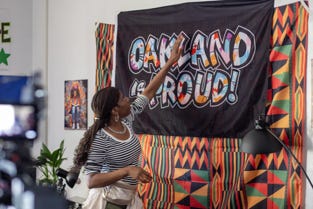
Being in the film world is not for the weak. It is a grind - an everyday, continuous grind. Some days I would be too tired to take it on. But when you have colleagues like Stacie, who never complain and just do the work, with a mission and on a mission, you realize it’s a privilege to be part of this industry. To work among filmmakers and creatives who believe in the story and the message they’re telling. And if we all put that above everything else, the crowdfunding, the long nights figuring out Acts One, Two, and Three, understanding character arcs, plots, crew, budget, distribution, it’s all worth it.
THE PROCESS
I later told Stacie that if she ever needed support on any production, to please let me know. She did not take my words in vain.
The following year, Stacie reached out and brought me on initially as a producer on one of her feature films. I was enthusiastic and excited to help bring her production to life. I had seen her work ethic firsthand, so of course I agreed. I also told her that if there were any other positions she needed filled, to let me know. At the time, I was building my reputation in the Bay as an AD, director, and script supervisor, but AD work felt closest to my day to day strengths.
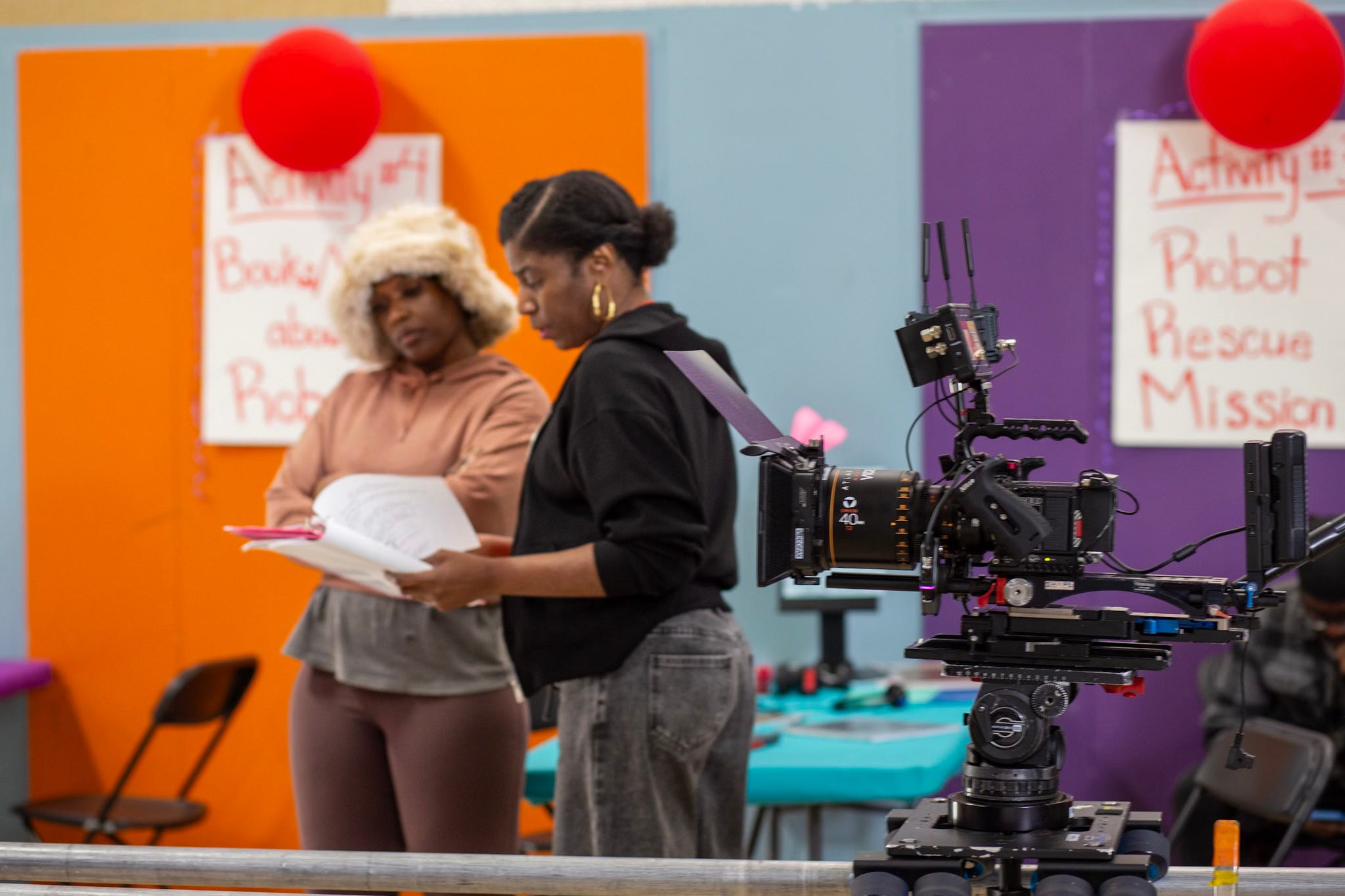
When the opportunity came, she brought me on as 2nd AD on one of her feature films. I was responsible for keeping the parents, students, and staff informed on all things production, schedule, locations, and meals. It was a great collaboration, and I kept finding ways to stay involved. That led to a second production with her, again, as 2nd AD.
Working on set with Stacie is a privilege. She has such a warm heart that makes everyone feel safe, free to be themselves, and to take a leap.


Meet the Director:
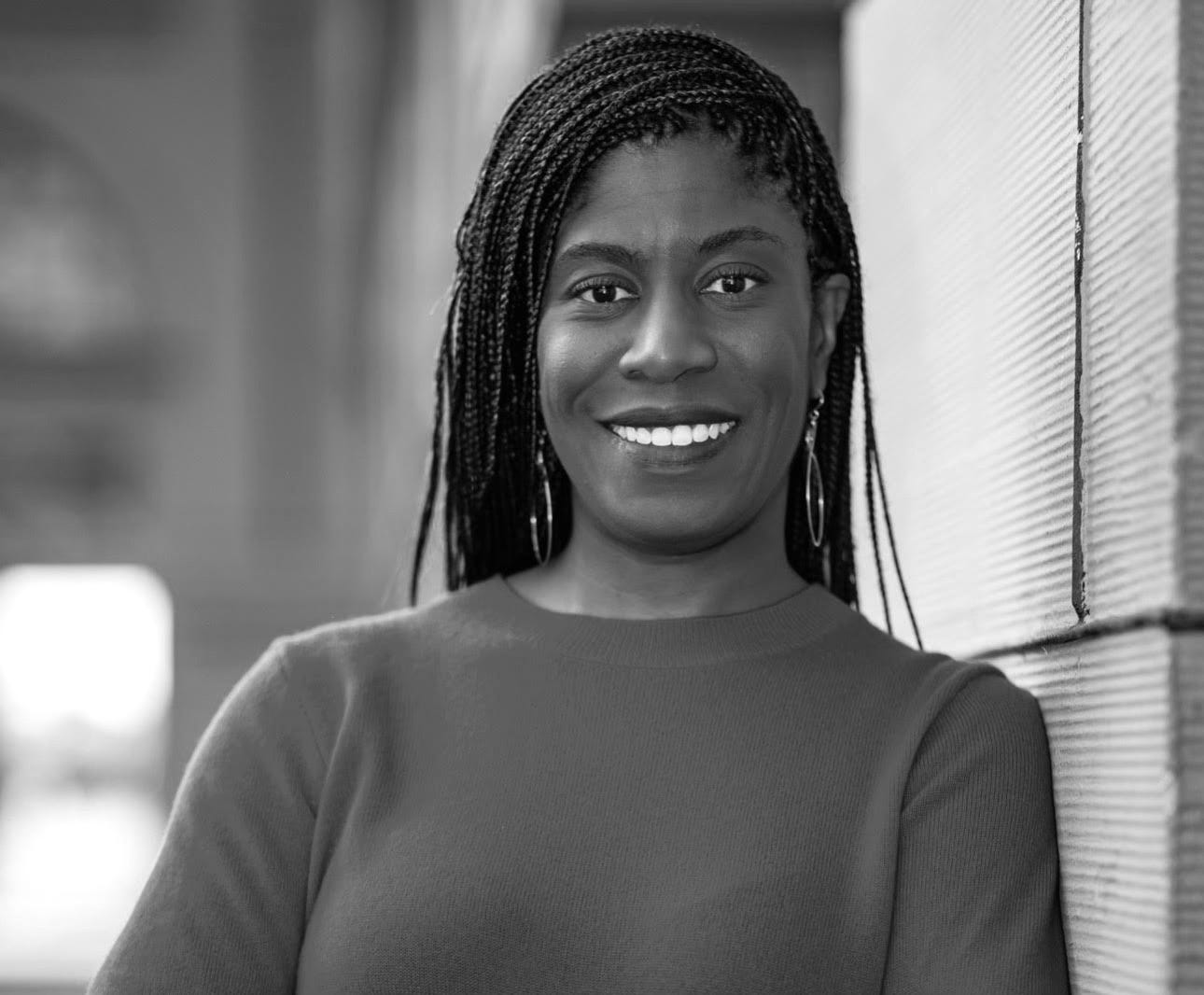
How are you feeling about your film screening at Brave Maker Film Fest?
I’m excited to see the cast and crew and to celebrate with them as we see our hard work come together. It’s always interesting to hear audience questions and feedback. Like any work of art, people will have varied responses to the film. People take away so many different things and have diverse perspectives that never crossed my mind. I am truly thankful for the opportunity to screen at the festival.
Where are you from?
I’m from Carson, CA, a city near Los Angeles.
How did you become a filmmaker?
I became a filmmaker by default. I came to the conclusion that systems don’t change. I figured that I could reach more people through film and that people would be more receptive to that medium. I’m a former teacher who became frustrated with the education system. I went to law school in between my teaching career, graduated, and returned to teaching. Then in 2018, I left the teaching profession for my mental, emotional, and physical health. I witnessed so much while teaching that I knew I wanted to share the realities of teaching because I knew that many people, including parents, had no idea. In my mind, I kept saying, “People need to see this because they wouldn’t believe me if I told them.” Thus, the seeds were planted for storytelling.
I was diagnosed with PTSD when I left teaching due to the stress from my teaching experience. I took a screeningwriting class, and the instructor coached me through writing my first feature film. I started attending a lot of film events when I lived in Los Angeles, making short films, and helping other filmmakers. Then, I moved to the San Francisco Bay Area and continued exploring filmmaking. In 2025, I told myself that it would be my year to execute, regardless of what happened.
What is your favorite part of being a filmmaker?
Being able to express myself. The content in the films is healing for me. Even if the system doesn’t change, I feel good inside about what I know is the truth. Nobody can tell me otherwise.
Pre-production, production, or post?
Post-production even though it’s the most work, and feels the hardest to me! We filmed Mr. Advocate in a total of 5 days spread across different months with pick up shots (additional shots needed to bring the story together) on the 6th day of filming. But we’ve been working on post-production for almost a year. Post-production is when you really get started and learn the story better during the editing process. At this stage, there’s light at the end of the tunnel because the actual filming is done so I feel like I have more control over what happens next. During production, I’m accountable to the cast and crew as the director for a specific length of time. But during post-production, I determine when things get completed so I’m not accountable to or responsible for anyone. During post-production, I work with the editor, sound engineer, music supervisor, and attorney.
What’s the logline of your film?
When a new teacher’s AI show turns a test-obsessed school upside down, his principal makes it clear that innovation is welcome as long as it doesn’t change anything.
Why this film? Why now?
I’ve spent my life on both sides of the classroom. I was a student who was bused to schools in other cities, then a teacher, and law school graduate. Everywhere I taught, I saw the same thing. Schools that say they value our children and the people who teach them, and systems that quietly reward the opposite even with good teachers and administrators. That is the story of Mr. Advocate. A teacher tries to actually change something, and the school welcomes him as long as nothing really changes.
I’m telling it now because this is the moment. AI is walking into classrooms before anyone has decided what it’s for. Testing still runs the show. Good teachers keep walking out the door. I made this film to pull those hidden truths into the light, because our children and our educators deserve better than a system that undervalues them both.
Where do you get your inspiration?
I get inspiration from my mom who told me years ago to stop complaining about the school system. She would say, “All you do is complain. Nobody wants to hear that. Do something. Stop complaining. What solutions do you have?” Her statements made me feel misunderstood at the time, but now I understand what she meant. I was also inspired by my grandmother who was a teacher in segregated Virginia. As a child, my mother told me that her family was respected for the simple fact that her mother, my grandmother, was a teacher. As a result, I always valued and respected teachers.
Top 3 movies of all time?
Crooklyn, Origin, Do The Right Thing
Top 3 directors?
Spike Lee, Ava DuVernay, John Singleton for the courage to make what they wanted to make and doing it without and despite.
What’s next? -
We have submitted deliverables for a possible distribution deal for Mr. Advocate. We have a trilogy of feature-length films called THE SYSTEM that were filmed last year. Mr. Advocate is the first of those films to be released. My editor, Jordan Skipper, will begin editing the second film in the trilogy. When the second film is finished, he’ll begin editing the third film in the trilogy. My film production company, School Dismissed, will complete a CA college tour and a HBCU tour.
What’s your reality in 5 years?
THE SYSTEM Trilogy will be continuously licensed to colleges, universities, and organizations. I will have a roster of contracts with K-12 school districts to screen my film as professional development for school staff with a facilitated dialogue. It will also have a distribution deal. My film will be sought at for education and education tech conferences.
How much does where you’re from influence your films?
Everything. The singular act of being bused to school from first grade through high school taught me from the beginning that schools are different. I remember as a first grader wondering why I was awake early in the morning getting ready for school when it was still dark outside while the other neighborhood kids were still asleep because they attended the elementary school less than 5 minutes away. My parents didn’t have to explain anything to me about inequalities. It was evident. I saw it myself that I was bused from an all-Black neighborhood to a gifted school in a predominately white and Asian neighborhood.
Favorite part of directing? Least favorite?
I don’t have a favorite part of directing because I don’t actually enjoy it. It’s a means to an end and must be done. Since it’s my vision for the content in the films, then I feel that I should be the director. My least favorite part is feeling like I don’t know what I’m doing.
Favorite part of writing? Least favorite?
Getting the truth out is my favorite part. It’s painful to relive some of the experiences, and sometimes I get triggered. But I have to be vulnerable, to an extent, in order to tell the truth. The scripts include fictionalized characters and some fictionalized events. I have to forget about whether people will wonder, “Did that actually happen to her?” I’ve gotten to the point where it doesn’t matter what people think, and I don’t have to explain myself if I don’t want to. It’s very freeing.
What message do you want to convey to your audience?
I want to convey to my audience that schools have a lot of politics going on. There is an education system that all parents, students, teachers, and administrators have to navigate.
Mr Advocate screens at the Brave Maker Film Festival on July 11 at 11:30AM. This is the Bay doing what it does best - creating, showing up, and showing out. Don’t miss it!
🎟️Mr Advocate at the Brave Maker Film Fest
Until next time, keep supporting the creatives around you - you never know who you’re standing next to at opening night.
From the village,
The OP
Thanks, Triana! This is great! Appreciate it.